

Human Albumin Infusion at Home: Who Benefits, When It Helps, and How We Keep It Safe in KL, PJ & Selangor
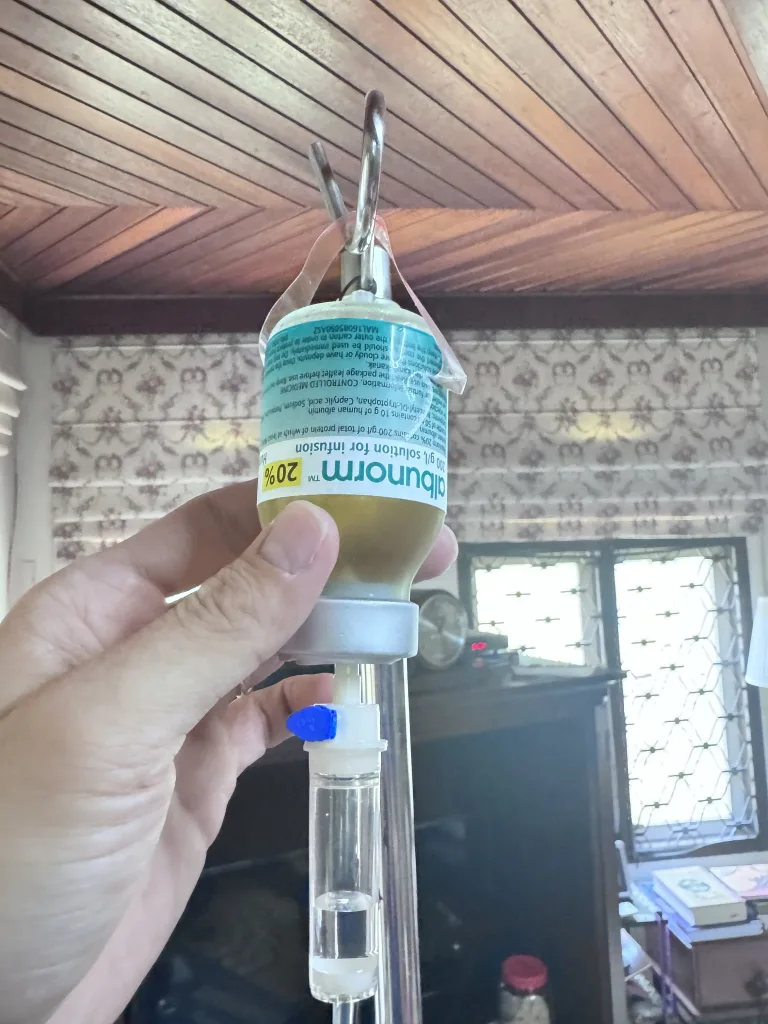
Human albumin is a sterile protein solution used to expand blood volume and support circulation. In carefully selected, medically stable patients, an at-home infusion can reduce hospital trips, stabilize blood pressure after fluid shifts, and support liver-related complications—always under a specialist’s plan and real-time monitoring. Therefore, if care is coordinated with your hepatology or medical team, albumin at home can be both convenient and clinically appropriate across Petaling Jaya, Kuala Lumpur, Shah Alam, Klang, Subang Jaya, and wider Selangor. For unstable conditions or sepsis, however, treatment belongs in hospital.
What Human Albumin Does
Albumin maintains plasma oncotic pressure and transports hormones, drugs, and electrolytes. Because it draws fluid into the blood vessels, clinicians use it to correct or prevent circulatory dysfunction in specific scenarios, not just to “treat a low albumin lab result.” Consequently, a proper work-up for the cause of low albumin is still essential. NCBI+1
When At-Home Albumin Makes Sense
Although many indications are hospital-based, there are select cases in which GP House Call can deliver albumin at home in Klang Valley under a consultant’s plan:
-
After Large-Volume Paracentesis (LVP) for Ascites
When ≥5 L of fluid is removed, giving albumin reduces post-paracentesis circulatory dysfunction and helps protect the kidneys. If the tap is done as a day-case, the infusion can be arranged at home the same day under protocol. Lippincott -
As Part of Liver-Related Complication Management
In cirrhosis—e.g., spontaneous bacterial peritonitis (with antibiotics) or hepatorenal syndrome (with vasoconstrictors)—albumin is guideline-supported; however, because these conditions can deteriorate suddenly, treatment is usually hospital-based. We only provide home infusions when the specialist explicitly deems the setting safe and the patient is stable. AASLD -
Selected Post-operative or Complex Medical Plans
Occasionally, specialists recommend short albumin courses after procedures or during complex home-care plans. In such cases, we follow written orders, check vitals, and escalate when thresholds are crossed. Because safety comes first, we do not proceed without clear criteria.
Important: Routine dehydration or “nutritional” low albumin is not an automatic reason for albumin infusion; the underlying cause must be addressed. NCBI
Proven Benefits (in the right patients)
-
Maintains intravascular volume and oncotic pressure to stabilize circulation after fluid shifts. NCBI
-
Lowers kidney stress and improves sodium/creatinine trends after large-volume paracentesis (supported by analyses validating the ≥5 L threshold). Lippincott
-
Complements antibiotics in SBP and pairs with vasoconstrictors in HRS per liver society guidance, though typically in hospital. AASLD
Meanwhile, for sepsis, guidelines suggest adding albumin only after large volumes of crystalloids and in hospital settings—so we do not deliver albumin for sepsis at home. Society of Critical Care Medicine (SCCM)
Who Should Not Receive Albumin at Home
Because albumin shifts fluid into the bloodstream, it can precipitate fluid overload in people with significant heart failure, pulmonary edema, or uncontrolled hypertension. Moreover, anyone with acute sepsis, breathing difficulty, or rapidly changing vitals should go to hospital immediately. Mayo Clinic
How GP House Call Delivers Albumin Safely (Klang Valley)
Because safety drives outcomes, our protocol includes:
-
Pre-visit review: Confirm specialist indication, recent labs, weight, comorbidities, and target dose (e.g., 5% vs 20%). We also confirm escalation routes in Kuala Lumpur & Petaling Jaya.
-
On-site setup: Aseptic IV line, continuous pulse oximetry and blood pressure monitoring, and observation during and after the infusion.
-
Emergency readiness: Oxygen, anaphylaxis kit, and clear thresholds to stop and escalate.
-
After-care: Written guidance for families plus lifetime follow-up via call/WhatsApp.
Because our team is mobile, we also coordinate related therapies—IV hydration, antibiotic infusions, wound care, and palliative support—so recovery continues at home without unnecessary travel.
Frequently Asked Questions (Q & A)
Q1: What is the difference between 5% and 20% albumin?
5% is roughly iso-oncotic and expands plasma volume more gently; 20% is hyperoncotic and draws fluid into the intravascular space more strongly. The choice depends on indication and hemodynamic goals, which the doctor determines. bnf.nice.org.uk
Q2: How long does an infusion take?
Typically 30–120 minutes, depending on the dose, concentration, venous access, and your stability. Because safety matters, we never rush the rate.
Q3: Can albumin fix low albumin from “poor nutrition”?
Often, no. Because low albumin is usually due to inflammation, liver disease, or kidney loss, treating the cause is more effective than chasing a number. NCBI
Q4: Is albumin used for sepsis at home?
No. Because sepsis requires hospital-level resuscitation, guidelines restrict albumin use to specific hospital scenarios after substantial crystalloids. Society of Critical Care Medicine (SCCM)
Q5: What are the side effects?
Potential issues include fluid overload, allergic reactions, headache, or shortness of breath. Therefore, our team monitors continuously and carries emergency medications. Mayo Clinic
Q6: Will insurance cover it?
Coverage varies by plan and indication. Because approvals change, our admin team can advise after a quick eligibility check.
Helpful External References (latest & reputable)
-
AASLD Practice Guidance – Ascites/SBP/HRS management (albumin with ≥5 L paracentesis; SBP/HRS contexts). AASLD
-
Cleveland Clinic Journal of Medicine (2024) – Albumin in sepsis: where it helps (and where it doesn’t). Cleveland Clinic Journal of Medicine
-
Surviving Sepsis Campaign (2021, summary 2023 review) – When albumin is considered in sepsis. Society of Critical Care Medicine (SCCM)PMC
-
NICE/BNF – Albumin solution – Indications, cautions, and product overview. bnf.nice.org.uk
-
StatPearls – Albumin physiology & hypoalbuminemia overview. NCBI+1
-
Journal of Hepatology (2025) – Contemporary statement reinforcing 6–8 g/L dosing after LVP (contextual reading). Journal of Hepatology
Internal Links (related GP House Call services)
-
Home Visit Doctor – Kuala Lumpur & Selangor: https://gphousecall.my/ GP House Call
-
Our Services (IV drip, antibiotics, wound care, palliative): https://gphousecall.my/our-services/ GP House Call
-
IV Hydration at Home (when simple fluids are enough): https://gphousecall.my/blog/iv-hydration-drip-for-dehydration-at-home-safe-fast-and-professional-care-in-klang-valley/ GP House Call
-
Total Parenteral Nutrition (TPN) at Home: https://gphousecall.my/blog/why-and-what-is-the-benefit-of-getting-total-parenteral-nutrition-tpn-at-home/ GP House Call
-
Warning Signs a Senior Needs a Doctor Now: https://gphousecall.my/blog/5-urgent-warning-signs-a-senior-at-home-needs-medical-attention/ GP House Call
-
Contact Us (fast booking in PJ, KL, Shah Alam, Klang): https://gphousecall.my/contact-us/ GP House Call
Who We Help (Locations & Scenarios)
Because travel can be difficult for home-dwelling seniors and patients with chronic liver disease, GP House Call serves Petaling Jaya, Kuala Lumpur, Shah Alam, Klang, Subang Jaya, Damansara, and the wider Klang Valley. Additionally, families in Bangsar and Cheras often request same-day care when hospitals are crowded.
Ready to Arrange Safe Albumin Care at Home?
Because timing matters, we coordinate directly with your specialist, prepare the medication, and monitor throughout. Then we follow up for life via call or WhatsApp.
Call / WhatsApp: +60 11-75167688
Book now: https://gphousecall.my/contact-us/ GP House Call
Medically reviewed by Dr. Xavier Chong Shin Thong , MD
Founder of GP House Call , Ex- Medical Officer in Sultanah Fatimah Specialist Hospital, Muar
Disclaimer: This article is for general education. Because individual cases differ, final decisions must follow a doctor’s assessment and current specialist guidelines.