

Medically reviewed by Dr. Xavier Chong Shin Thong, MD
Founder of GP House Call | Over 10 years of experience in home-based medical care and support.
Estimated reading time: 5 minutes
What Is the Difference Between Silicone and Rubber NG Tubes?
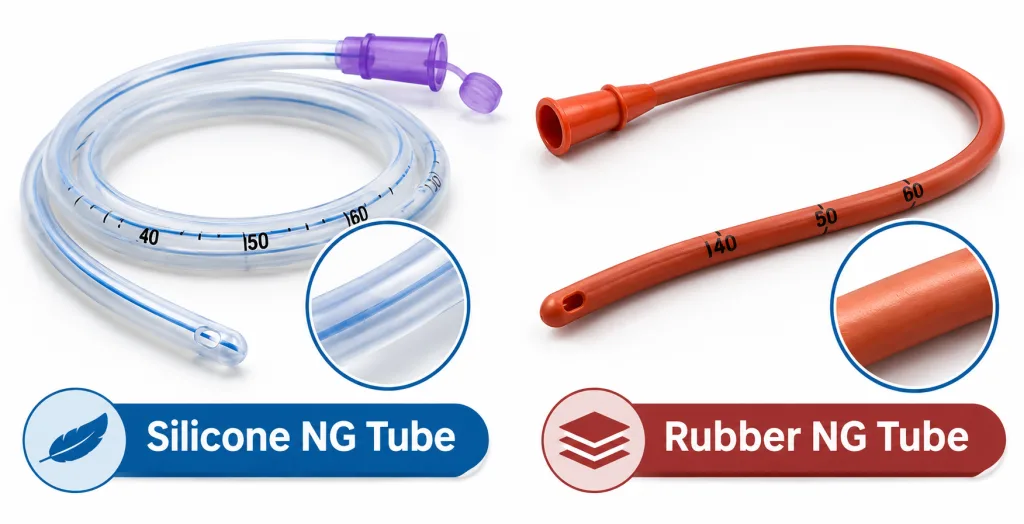
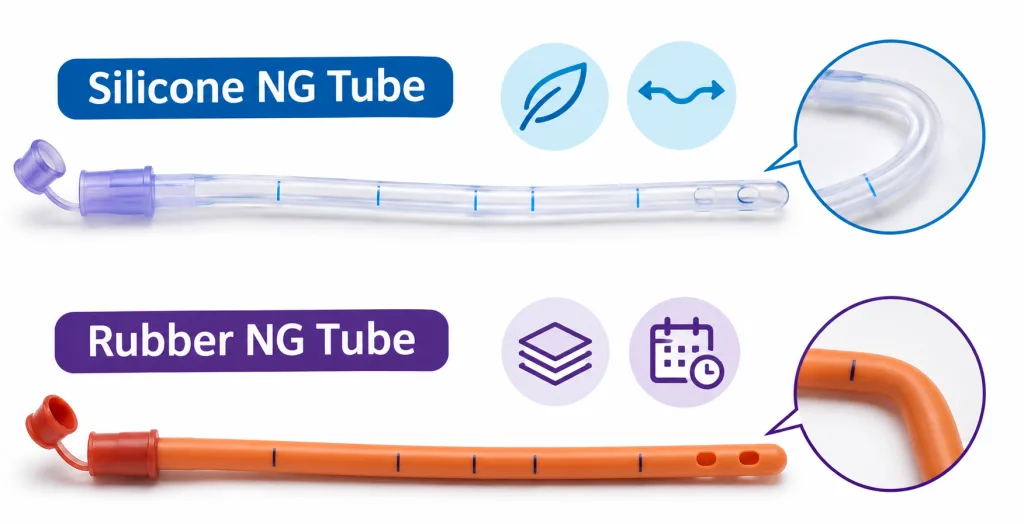
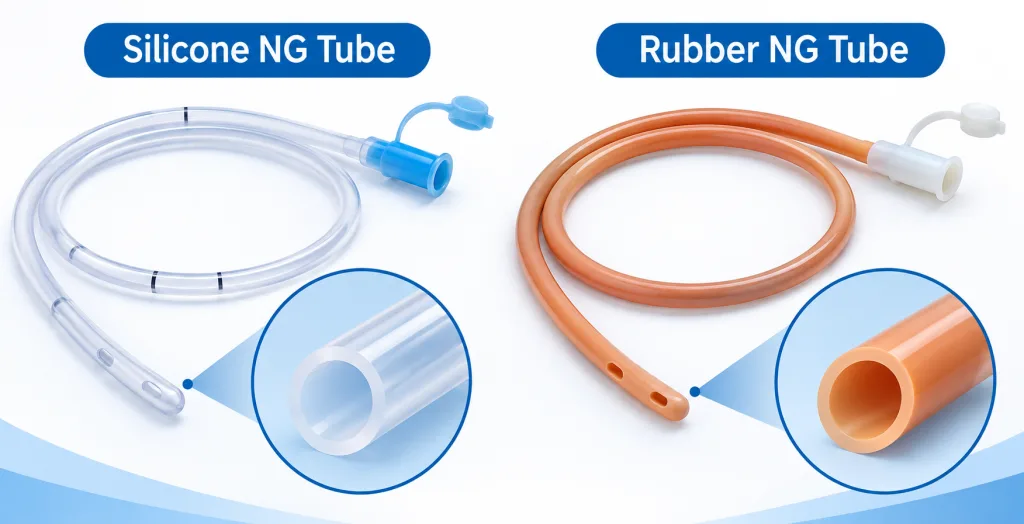
Silicone nasogastric (NG) tubes are generally soft, flexible and suitable for feeding over several weeks, depending on the specific product. Traditional rubber or latex-containing NG tubes may be intended for shorter-term applications, depending on their design.
Other commonly used NG tube materials include polyvinyl chloride (PVC) and polyurethane (PU).
The most suitable feeding tube depends on the patient’s medical condition, feeding requirements, comfort, allergies and expected duration of use.
At GP House Call, we support patients who require medical assessment and selected feeding tube insertion or replacement procedures at home across Kuala Lumpur and Selangor.
This guide helps patients and family caregivers understand the differences between NG tube materials and make informed healthcare decisions.
What Is a Nasogastric (NG) Tube?
A nasogastric tube is a flexible medical tube inserted through the nose, passing through the oesophagus into the stomach.
An NG tube may be used for:
- Providing liquid nutrition
- Administering prescribed medications
- Providing water and hydration
- Removing stomach contents or gas
- Supporting selected patients with swallowing difficulties
NG tubes are commonly used in patients recovering from a stroke, undergoing treatment for certain neurological conditions or experiencing difficulties with swallowing.
Not every patient with poor oral intake requires an NG tube. A medical assessment is necessary to determine whether tube feeding is appropriate.
Silicone vs Rubber vs PVC vs Polyurethane NG Tubes
| Comparison | Silicone | Rubber or latex | PVC | Polyurethane |
|---|---|---|---|---|
| Flexibility | Generally very soft | Varies by product | Relatively rigid | Flexible |
| Comfort | Generally good | Varies by design | May be less comfortable over time | Generally good |
| Duration of use | Selected products allow several weeks | Product-dependent | Usually short-term | Selected products allow several weeks |
| Latex allergy concerns | Check latex-free labelling | Possible with natural latex | Check product labelling | Check product labelling |
| Tube blockage | Possible | Possible | Possible | Possible |
| Material cost | Generally higher | Varies | Generally lower | Generally higher |
| Typical application | Enteral feeding | Product-specific applications | Short-term feeding or drainage | Enteral feeding |
The maximum duration of use must always follow the manufacturer’s instructions and the patient’s individual clinical care plan.
5 Key Differences Between Silicone and Rubber NG Tubes
1. Comfort and Flexibility
Silicone NG tubes are generally soft and flexible, which may improve comfort for patients who require ongoing tube feeding.
Rigid or larger-diameter tubes may cause more discomfort, particularly around the nose and throat.
Polyurethane feeding tubes also provide a balance between flexibility, durability and a relatively thin tube wall.
However, patient comfort depends on more than the tube material. Tube diameter, securement, positioning and individual tolerance are equally important.
2. Duration of Use
One of the most common questions from family caregivers is how often an NG tube needs to be replaced.
Some silicone and polyurethane feeding tubes are designed to remain in place for several weeks. Selected products specify a maximum duration of up to six weeks or longer.
PVC tubes are generally intended for shorter-term use.
According to Pennine Healthcare’s guidance on NG tube selection, permitted usage periods vary between materials and individual products.
There is no universal replacement interval for every silicone, rubber or polyurethane NG tube.
Always follow the manufacturer’s instructions and the replacement schedule recommended by the treating healthcare professional.
3. Allergies and Material Sensitivity
Natural rubber latex may trigger allergic reactions in individuals with latex sensitivity.
A confirmed latex-free silicone or polyurethane feeding tube may be a suitable alternative.
If the patient has a history of latex allergy, inform the healthcare professional before any feeding tube insertion or replacement procedure.
Other components, including adhesives and securing devices, may also cause skin irritation.
4. Tube Blockage and Durability
All types of NG tubes can become blocked.
Common contributing factors include:
- Inadequate flushing
- Unsuitable medication formulations
- Incompatible feeding preparations
- Small internal tube diameter
- Tube kinking
- Incorrect medication administration
The tube material alone does not determine whether a feeding tube will become blocked.
Family caregivers should follow the prescribed feeding and flushing instructions. Consult a doctor or pharmacist before crushing tablets, as some medications must not be crushed.
Never apply excessive pressure to a blocked feeding tube.
5. Cost and Replacement Expenses
The purchase price of a feeding tube varies according to its material, manufacturer, size and design.
Short-term PVC tubes are generally less expensive than silicone or polyurethane feeding tubes.
However, families should also consider:
- Replacement frequency
- Doctor or nursing procedure fees
- Patient comfort
- Transportation expenses
- Feeding interruptions
- Follow-up medical care
A higher-priced feeding tube may be more economical over time if it is clinically suitable and designed for longer use.
Which NG Tube Is Suitable for Older Adults?
For older adults who require feeding through an NG tube for several weeks, a suitable silicone or polyurethane feeding tube may offer advantages in comfort and durability.
However, tube selection should consider:
- The reason for tube feeding
- Expected duration of nutritional support
- Swallowing function
- Medical conditions and allergies
- Risk of aspiration
- Patient comfort and preferences
- Overall treatment goals
Age alone should not determine the type of feeding tube or whether tube feeding is appropriate.
A doctor, dietitian and swallowing specialist may be involved in developing an individualised feeding plan.
How Often Should an NG Tube Be Replaced?
NG tube replacement frequency depends on the specific tube, its condition and the manufacturer’s instructions.
A feeding tube may require assessment or earlier replacement if:
- It has become displaced or accidentally removed.
- It is blocked and cannot be cleared safely.
- The tube is leaking, damaged or deteriorating.
- There is persistent discomfort or pressure injury.
- The recommended maximum usage period has been reached.
- The treating healthcare professional advises replacement.
Keep a record of the tube’s manufacturer, material, size, insertion date and recommended replacement date.
This information helps healthcare professionals plan ongoing feeding tube care.
Can an NG Tube Be Inserted or Replaced at Home?
Yes. Selected medically stable patients may undergo NG tube insertion or replacement at home when an appropriately trained healthcare professional is available and tube placement can be safely confirmed.
Home-based NG tube care may be particularly helpful for older adults and individuals who experience difficulties travelling to a clinic or hospital.
However, home insertion is not suitable for every patient.
Hospital assessment may be necessary when insertion is difficult, contraindications are present, complications are suspected or correct tube placement cannot be confirmed at home.
Patients and caregivers should not attempt unsupervised insertion or replacement without appropriate professional training and an established clinical care plan.
How Is Correct NG Tube Placement Confirmed?
Correct tube placement is essential before administering feeding formula, water or medications.
An incorrectly positioned NG tube can enter the respiratory tract and cause serious, potentially life-threatening complications.
According to NHS England’s NG tube safety guidance, accepted initial placement confirmation methods include:
- Testing gastric aspirate using appropriate pH indicator strips, with an accepted safe range of pH 1–5.5.
- X-ray confirmation when required, interpreted by an appropriately trained healthcare professional.
Listening for a bubbling sound after injecting air, commonly called the whoosh test, is not a reliable method of confirming correct NG tube placement.
Never introduce food, water or medication into a newly inserted NG tube before its position has been confirmed.
If the tube position cannot be confirmed, do not use it. Contact a healthcare professional for further assessment.
Home NG Tube Care Checklist for Family Caregivers
Use this checklist alongside the feeding plan provided by the patient’s healthcare team.
- Record the NG tube insertion and recommended replacement dates.
- Perform tube position checks as instructed before use.
- Check for changes in the visible external tube length.
- Inspect the nose and surrounding skin for irritation.
- Maintain appropriate hand hygiene.
- Follow the prescribed feeding and flushing instructions.
- Maintain the recommended upright position during and after feeding.
- Monitor for coughing, vomiting or feeding intolerance.
- Avoid administering medications without checking their suitability.
- Keep the healthcare provider’s contact information available.
For further information, refer to Cambridge University Hospitals’ guide to tube feeding at home.
When Should You Seek Medical Attention?
Stop using the NG tube and seek medical advice promptly if the patient develops:
- Persistent coughing during feeding
- Repeated vomiting
- Abdominal pain or significant bloating
- Suspected tube displacement
- Feeding tube blockage or leakage
- Nosebleeds or pressure injuries
- Fever accompanied by respiratory symptoms
- Difficulty confirming the correct tube position
If the patient experiences severe breathing difficulties, choking, blue lips or loss of consciousness, call 999 immediately.
Do not wait for a scheduled home visit during a medical emergency.
Is an NG Tube Suitable for Long-Term Feeding?
Although some patients continue using NG tubes for extended periods, nasogastric feeding is generally considered a short- to medium-term feeding method.
The National Institute for Health and Care Excellence (NICE) recommends considering gastrostomy feeding when enteral nutritional support is expected to continue for four weeks or longer.
A percutaneous endoscopic gastrostomy (PEG) tube delivers nutrition directly into the stomach through the abdominal wall.
However, a PEG tube is not automatically appropriate for every patient.
Decisions regarding long-term tube feeding should consider the patient’s medical condition, prognosis, preferences, quality of life and overall goals of care.
NG Tube Insertion and Replacement at Home in KL and Selangor
GP House Call provides home-based medical support for older adults and individuals with limited mobility.
Patients and families can enquire about:
- Nasogastric tube insertion at home
- NG tube replacement at home
- Feeding tube assessment
- Feeding tube-related complications
- Elderly medical consultations
- Post-hospitalisation medical care
- Chronic disease management
- Caregiver education and follow-up guidance
All procedures are subject to medical assessment, clinical suitability and the availability of appropriate placement confirmation.
Our doctor home visit coverage includes selected areas of Kuala Lumpur, Petaling Jaya, Subang Jaya, Puchong, Damansara, Cheras, Klang, Ampang and other parts of Selangor.
Explore our home medical services or check our service coverage.
Frequently Asked Questions (FAQs)
Is a silicone NG tube better than a rubber NG tube?
Silicone tubes are generally soft and flexible and may be more comfortable for ongoing feeding. However, the most appropriate tube depends on the patient’s condition, intended use and specific product design.
Can a silicone NG tube last for six weeks?
Some silicone NG tubes are designed for use for up to six weeks. The permitted duration varies between products. Follow the manufacturer’s instructions and the treating clinician’s recommendations.
Is a polyurethane NG tube better than a silicone NG tube?
Both materials have advantages. Polyurethane tubes can have thinner walls and a relatively larger internal opening, while silicone tubes are generally soft and flexible. Neither material is universally better for every patient.
Can a blocked NG tube be replaced at home?
Selected patients may undergo feeding tube replacement at home following medical assessment. Correct placement must be confirmed before restarting feeding.
How much does NG tube replacement cost in Malaysia?
The cost depends on the consultation fee, tube material, procedure requirements and location.
GP House Call’s standard weekday daytime consultation starts from RM250. Feeding tube equipment and replacement procedure charges may be additional.
Where can I find an NG tube replacement service near me?
GP House Call accepts enquiries for home-based NG tube assessment and selected replacement procedures across Kuala Lumpur and Selangor.
Contact us to confirm availability and clinical suitability.
Final Takeaway
Silicone, rubber, PVC and polyurethane NG tubes have different characteristics and intended applications.
Silicone and polyurethane feeding tubes may be preferable when ongoing nasogastric feeding is required, while other materials may be appropriate for short-term or specific clinical applications.
The priority is not simply choosing the most expensive or longest-lasting feeding tube. Correct placement, appropriate tube selection, patient comfort and regular clinical assessment are essential for safe home tube feeding.
About the Medical Reviewer
Dr. Xavier Chong Shin Thong, MD
Founder of GP House Call
- Over 10 years of experience in home-based medical care and support
- Malaysian Medical Council (MMC) Registration No. 71097
- Former Medical Officer at Hospital Pakar Sultanah Fatimah, Muar
- Clinical focus on elderly medical care and home-based primary care
Need Medical Support for NG Tube Care at Home?
GP House Call provides home-based medical consultations across Kuala Lumpur and Selangor.
Call / WhatsApp: +60 11-7516 7688
Contact GP House Call | Our Medical Services | About Our Doctor
Medical References
- NICE – Nutrition Support for Adults
- NHS England – Medical Device and Nasogastric Tube Safety
- Pennine Healthcare – How to Select the Appropriate Nasogastric Tube
- Cambridge University Hospitals – How to Look After Your Nasogastric Tube
- Cambridge University Hospitals – Tube Feeding at Home
Originally published: 30 July 2025
Medical disclaimer: This article is intended for general educational purposes. It does not replace individual medical assessment, professional feeding instructions or personalised treatment recommendations.