Medically reviewed by Dr. Xavier Chong Shin Thong, MD
Founder of GP House Call
This article will discuss essential medical equipment for elderly care at home.
Introduction
Caring for elderly or bedridden patients at home requires more than comfort and daily assistance. Families also need the right medical equipment for home monitoring so they can detect early changes in blood pressure, oxygen level, temperature, and blood sugar.
Regular monitoring helps families notice warning signs earlier, especially in elderly patients with chronic illness, poor mobility, diabetes, hypertension, respiratory illness, frailty, or recurrent infections. According to the World Health Organization, older adults commonly live with multiple health conditions at the same time, including diabetes, chronic lung disease, pain, and reduced mobility.
This practical guide explains the essential medical equipment needed to monitor elderly and bedridden patients at home, how each device helps, and when to seek medical attention.
Why Home Monitoring Is Important for Elderly and Bedridden Patients ?
Elderly and bedridden patients may not always express symptoms clearly. Some may feel weak, confused, sleepy, breathless, or less responsive when unwell.
Therefore, basic monitoring at home helps families track:
- Blood pressure
- Pulse rate
- Oxygen saturation
- Body temperature
- Blood sugar level
- General daily condition
- Hydration status
- Warning signs of infection or deterioration
In addition, home monitoring supports better communication with doctors. Families can share actual readings instead of guessing.
Essential Medical Equipment Needed at Home
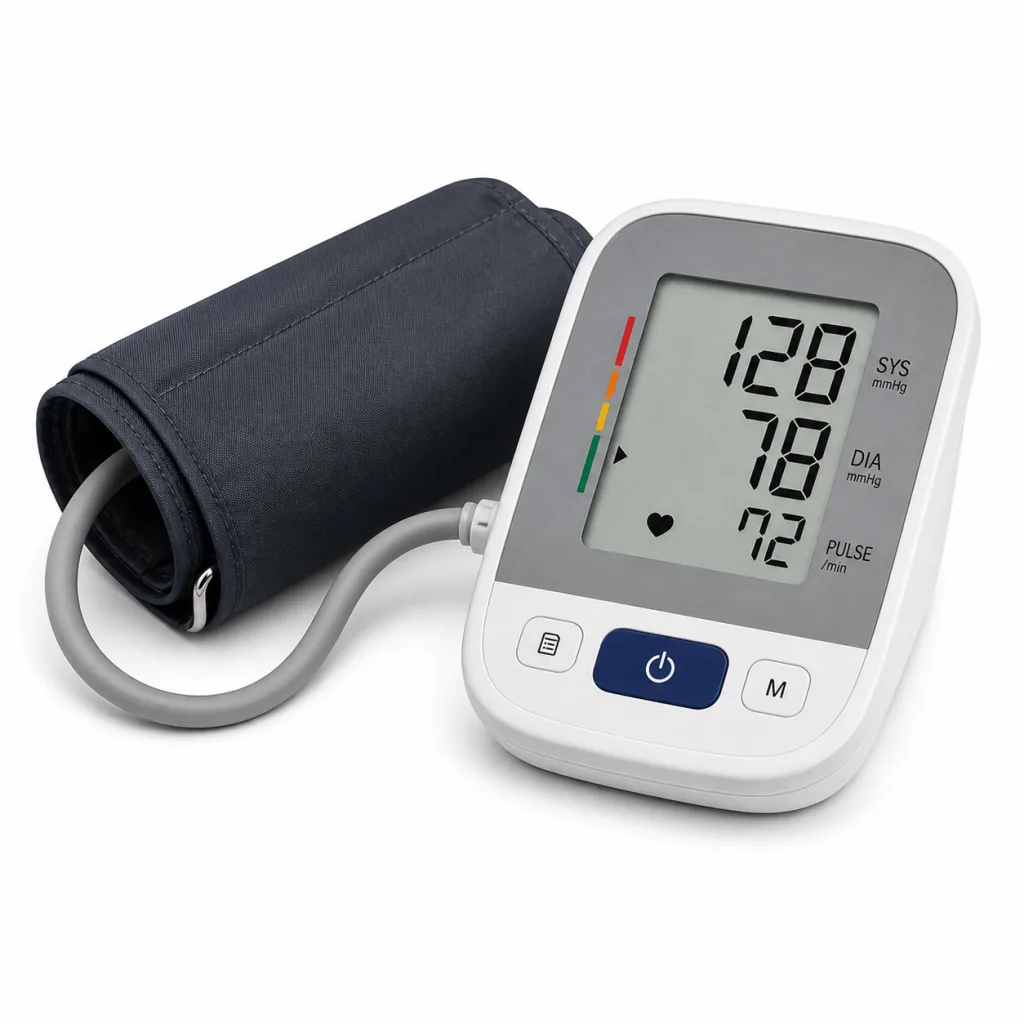
1. Blood Pressure Monitor
A blood pressure monitor is one of the most important medical devices for elderly patients at home.
It helps monitor:
- High blood pressure
- Low blood pressure
- Dizziness or fainting episodes
- Stroke risk
- Heart disease risk
- Medication response
- Dehydration-related low blood pressure
The American Heart Association recommends an automatic upper-arm cuff-style blood pressure monitor for home blood pressure monitoring.
Best Type to Use at Home
Choose:
- Digital upper-arm blood pressure monitor
- Correct cuff size
- Clear display screen
- Memory storage function
- Validated device if possible
How to Measure Blood Pressure Properly
For better accuracy:
- Let the patient rest for at least 5 minutes
- Sit the patient upright if possible
- Support the back
- Keep feet flat on the floor if the patient can sit
- Place the arm at heart level
- Avoid talking during measurement
- Repeat the reading after 1–2 minutes if the result looks abnormal
The American Heart Association advises proper positioning, including sitting upright with back supported, legs uncrossed, and arm supported at heart level.
When to Be Concerned
Seek medical advice if:
- Blood pressure remains very high
- Blood pressure becomes very low with dizziness or weakness
- Patient has chest pain, shortness of breath, weakness, confusion, or sudden speech difficulty
- Readings keep changing drastically
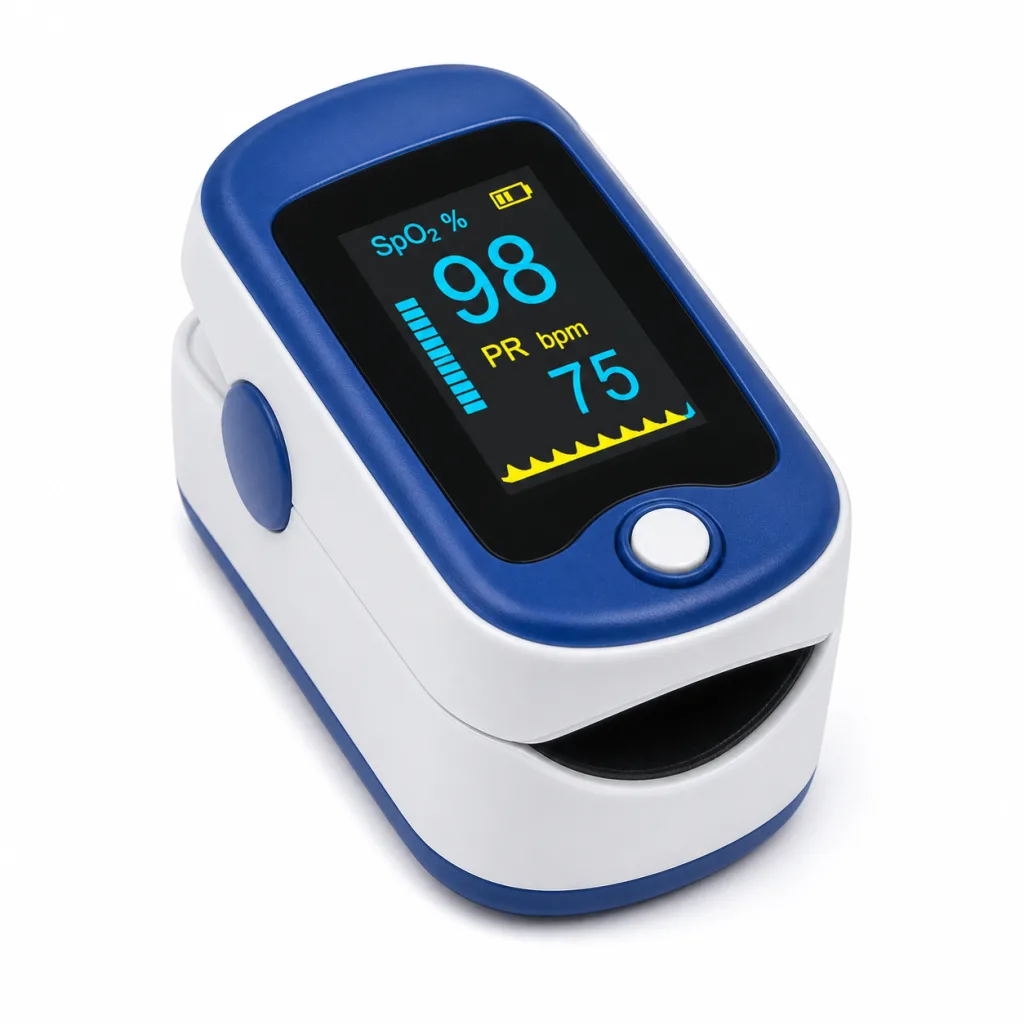
2. Fingertip Oximeter
A fingertip oximeter measures oxygen saturation, also called SpO₂, and pulse rate.
It is useful for elderly or bedridden patients with:
- Shortness of breath
- Pneumonia
- COVID-19 or flu-like illness
- COPD
- Heart failure
- Low oxygen risk
- Sudden weakness
- Drowsiness or confusion
NHS England describes pulse oximeters as tools that help patients monitor oxygen saturation at home, especially when supported by general practice and community care teams.
What the Oximeter Measures
A fingertip oximeter usually shows:
- SpO₂ percentage
- Pulse rate
- Sometimes a waveform or pulse strength indicator
How to Use a Fingertip Oximeter
- Warm the patient’s hand if fingers feel cold
- Remove nail polish if possible
- Place the device on the fingertip
- Keep the hand still
- Wait until the reading becomes stable
- Record the oxygen level and pulse rate
When to Seek Medical Advice
Seek medical help if:
- Oxygen level drops below the patient’s usual level
- SpO₂ remains low
- Patient becomes breathless
- Patient looks bluish, pale, cold, sweaty, confused, or very sleepy
- Pulse rate is very fast or very slow with symptoms
NHS patient guidance advises seeking help when oxygen saturation readings are low or when concerning symptoms such as confusion, severe drowsiness, fainting, or reduced urination occur.
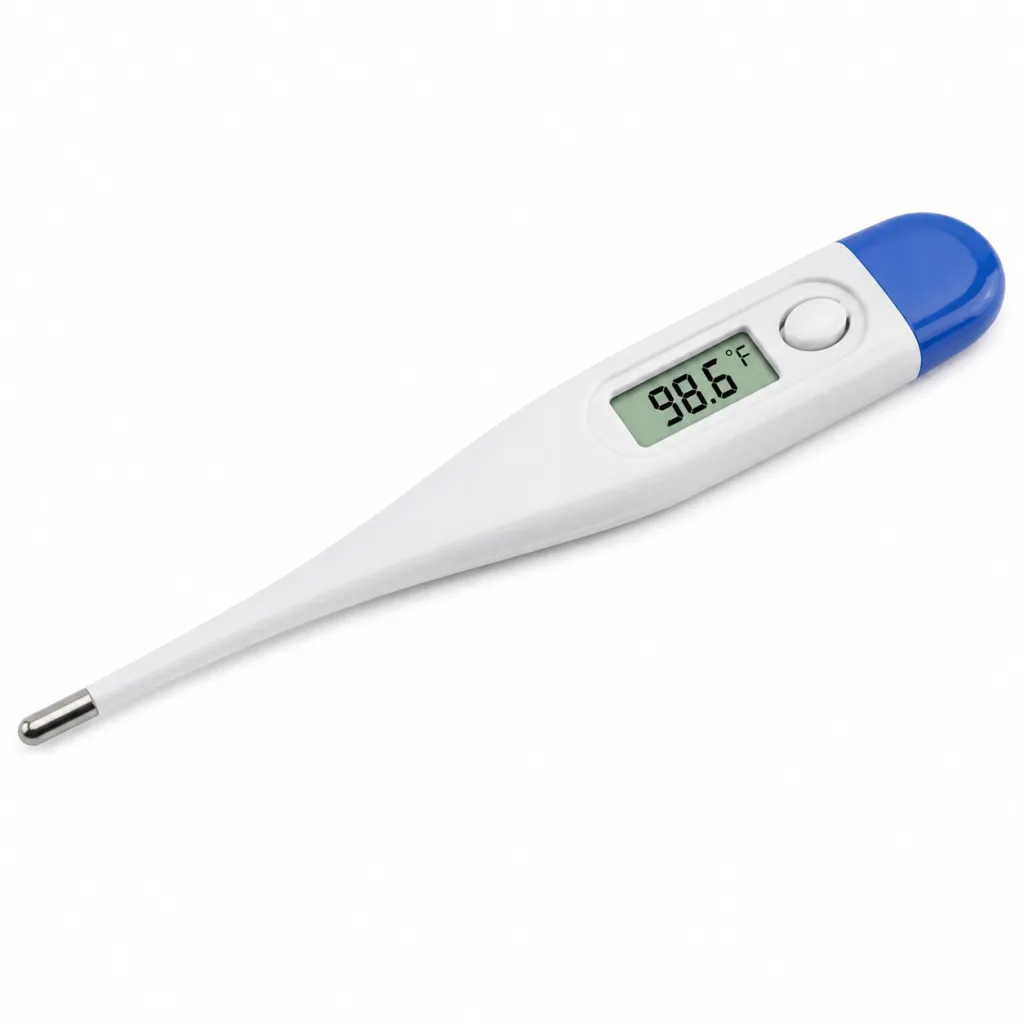
3. Digital Thermometer
A digital thermometer helps detect fever or abnormal body temperature.
This is especially important for elderly and bedridden patients because infections may not always present clearly. Some elderly patients may develop weakness, poor appetite, confusion, or drowsiness before obvious fever appears.
A Thermometer Helps Monitor
- Fever
- Infection
- Response to medication
- Worsening illness
- Low body temperature in frail elderly patients
Common Causes of Fever in Elderly Patients
Fever may occur due to:
- Urinary tract infection
- Chest infection
- Wound infection
- Skin infection
- Viral illness
- Dehydration
- Bed sore infection
Best Type to Use at Home
Choose:
- Digital oral thermometer
- Ear thermometer
- Forehead thermometer
- Large display thermometer for easier reading
When to Seek Medical Advice
Contact a doctor if:
- Fever persists
- Patient becomes weaker
- Patient becomes confused or drowsy
- Patient has poor oral intake
- Patient has cough, breathlessness, urinary symptoms, wound discharge, or worsening pain
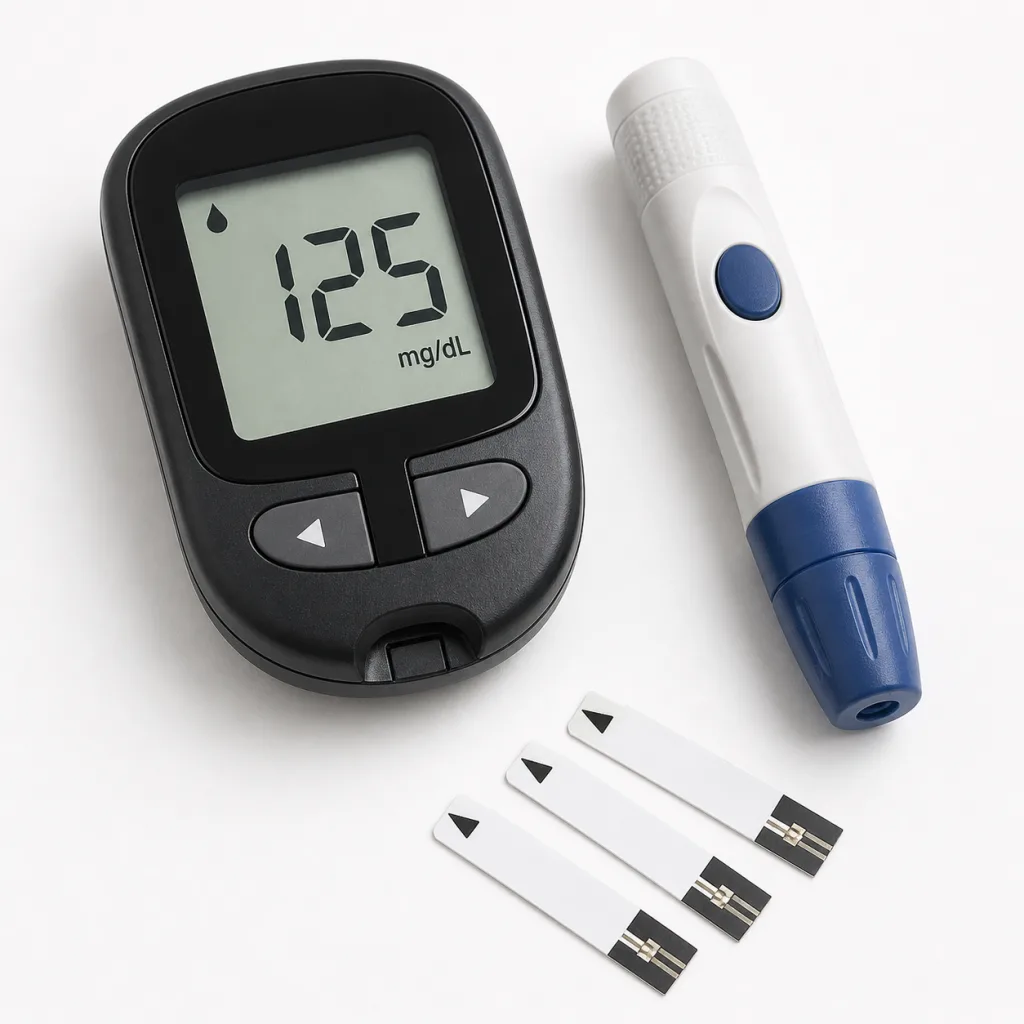
4. Glucometer
A glucometer, also called a blood glucose meter, measures blood sugar level.
It is essential for elderly or bedridden patients with:
- Diabetes mellitus
- Poor oral intake
- Insulin treatment
- Diabetic medication use
- Recurrent dizziness
- Sweating or shakiness
- Confusion
- Infection
- Poor wound healing
The CDC explains that blood sugar meters, also known as glucometers, can save readings for patients and healthcare teams to review. Patients can also keep written records.
What a Glucometer Kit Usually Includes
- Glucometer device
- Test strips
- Lancet device
- Lancets
- Alcohol swabs
- Blood sugar logbook
The FDA describes blood glucose monitoring devices as systems that include a handheld meter and test strips to measure glucose from a small blood sample.
When to Check Blood Sugar
A doctor may advise checking:
- Before meals
- After meals
- Before bedtime
- During illness
- When the patient feels dizzy, sweaty, weak, confused, or unusually sleepy
- After medication adjustment
Why Blood Sugar Monitoring Matters
Blood sugar can become too high or too low during illness. For bedridden elderly patients, poor appetite and infection can cause sudden blood sugar changes.
A glucometer helps families detect problems earlier and contact a doctor with useful information.
Additional Helpful Equipment for Elderly Home Monitoring
Besides the four essential devices, some families may also prepare extra items.
Useful Home Care Items
- Medication box
- Wound dressing supplies
- Disposable gloves
- Hand sanitizer
- Adult diapers
- Bed protector sheets
- Feeding cup
- Urine container
- Weighing scale
- Notebook for daily readings
- Emergency contact list
For Bedridden Patients
Bedridden patients may also need:
- Hospital bed
- Air mattress
- Bed rail
- Wheelchair
- Commode chair
- Suction machine if advised
- Nebulizer if prescribed
- Oxygen concentrator if prescribed
- Pressure sore prevention equipment
However, families should only use oxygen, suction, nebulizer medication, or other advanced equipment under medical advice.
Simple Daily Monitoring Checklist
Families can use this easy checklist for elderly and bedridden patients.
Morning Check
- Blood pressure
- Pulse rate
- Temperature
- Oxygen saturation if patient has breathing risk
- Blood sugar if diabetic
- Appetite
- Urine output
- Bowel movement
- Conscious level
- Pain score
- Wound condition if present
Evening Check
- Temperature
- Blood pressure if advised
- Oxygen level if unwell
- Blood sugar if diabetic
- Medication taken
- Food and fluid intake
- Any new symptoms
Record These Details
Write down:
- Date
- Time
- Reading
- Symptoms
- Medication given
- Doctor’s advice
- Follow-up plan
A simple record allows the doctor to detect trends faster.
Warning Signs That Need Medical Attention
Contact a doctor urgently if an elderly or bedridden patient has:
- Chest pain
- Shortness of breath
- Persistent low oxygen level
- Sudden confusion
- Sudden weakness
- Fainting
- Severe dizziness
- Very high or very low blood pressure
- Very high or very low blood sugar
- Persistent fever
- Poor oral intake
- Reduced urine output
- Worsening wound
- Severe pain
- Repeated vomiting
- New drowsiness
- Seizure
For life-threatening symptoms, call emergency services or go to the nearest hospital immediately.
Practical Tips Before Buying Home Medical Equipment
Choose Reliable Devices
Buy medical equipment from:
- Pharmacies
- Reputable medical suppliers
- Trusted healthcare providers
- Official brand distributors
Check These Features
Look for:
- Easy-to-read display
- Simple buttons
- Good battery life
- Correct cuff size for blood pressure monitor
- Compatible test strips for glucometer
- Clear instruction manual
- Warranty support
Avoid Common Mistakes
Avoid:
- Using wrong blood pressure cuff size
- Measuring oxygen with cold fingers
- Checking blood sugar with expired test strips
- Ignoring abnormal readings
- Treating readings without medical advice
- Forgetting to record results
- Comparing different devices without checking accuracy
When to Arrange a Doctor Home Visit
A doctor house call may help when the patient:
- Is bedridden
- Has mobility problems
- Feels too weak to travel
- Needs wound assessment
- Needs dehydration assessment
- Has fever or infection symptoms
- Needs medication review
- Requires elderly care assessment
- Needs palliative care support
- Needs monitoring after hospital discharge
For elderly patients, home medical assessment can reduce travel stress and allow the doctor to assess the patient in a familiar environment.
GP House Call: Home Medical Care for Elderly and Bedridden Patients
GP House Call provides doctor-led home medical service for patients who need medical assessment at home.
The service is suitable for:
- Elderly patients
- Bedridden patients
- Frail patients
- Patients with mobility issues
- Patients who need urgent but non-life-threatening care
- Families who prefer private medical care at home
Internal Links
- GP House Call Official Website
- Doctor House Call Service in Malaysia
- Home Visit Doctor for Elderly Patients
- Wound Care at Home
- Drip at Home / IV Drip at Home
External References
Reliable external references:
- World Health Organization: Ageing and Health
- American Heart Association: Home Blood Pressure Monitoring
- CDC: Monitoring Your Blood Sugar
- FDA: Blood Glucose Monitoring Devices
- NHS England: COVID Oximetry at Home
Frequently Asked Questions
1. What medical equipment is needed for elderly patients at home?
The most important equipment includes a blood pressure monitor, fingertip oximeter, digital thermometer, and glucometer. These devices help monitor blood pressure, oxygen level, temperature, pulse rate, and blood sugar.
2. What equipment is important for bedridden patients?
Bedridden patients may need basic monitoring devices, a hospital bed, air mattress, wheelchair, bed protector sheets, wound care supplies, and daily monitoring records. Some patients may need oxygen or suction equipment, but only under medical advice.
3. Why is a blood pressure monitor important for elderly patients?
A blood pressure monitor helps detect high or low blood pressure. This is important for elderly patients with hypertension, heart disease, dizziness, stroke risk, or medication changes.
4. Why does an elderly patient need a fingertip oximeter?
A fingertip oximeter checks oxygen saturation and pulse rate. It is useful when an elderly patient has cough, pneumonia, breathlessness, COPD, heart failure, or sudden weakness.
5. Is a thermometer necessary at home?
Yes. A digital thermometer helps detect fever early. Fever may suggest infection, especially in elderly or bedridden patients with urinary infection, chest infection, wound infection, or viral illness.
6. Who needs a glucometer at home?
A glucometer is important for patients with diabetes, especially those taking insulin or diabetic medication. It helps detect high or low blood sugar during illness, poor appetite, or medication changes.
7. How often should elderly patients check vital signs at home?
Stable elderly patients may only need monitoring once daily or a few times per week. Unwell patients, diabetic patients, or patients with unstable blood pressure may need more frequent checks based on doctor advice.
8. When should a family call a doctor?
Call a doctor if the patient has persistent fever, low oxygen, abnormal blood pressure, abnormal blood sugar, poor oral intake, reduced urine, worsening wound, sudden confusion, severe weakness, or breathing difficulty.
9. Can home monitoring replace a doctor consultation?
No. Home monitoring helps detect changes, but it does not replace medical assessment. A doctor should review abnormal readings, symptoms, and medication needs.
10. Is doctor house call suitable for elderly and bedridden patients?
Yes. A doctor house call is suitable when the patient has difficulty travelling, needs medical assessment at home, or requires urgent but non-life-threatening care.
Conclusion
The essential medical equipment needed to monitor elderly and bedridden patients at home includes:
- Blood pressure monitor
- Fingertip oximeter
- Digital thermometer
- Glucometer
These tools help families detect early changes, record useful information, and seek medical help at the right time. However, families should not rely on numbers alone. Symptoms, behaviour changes, appetite, urine output, breathing pattern, and overall condition also matter.
For elderly or bedridden patients who need medical care at home, GP House Call provides doctor-led home medical assessment, treatment, and follow-up support.
📞 Call or WhatsApp: +60 11-7516 7688
🌐 www.gphousecall.my