

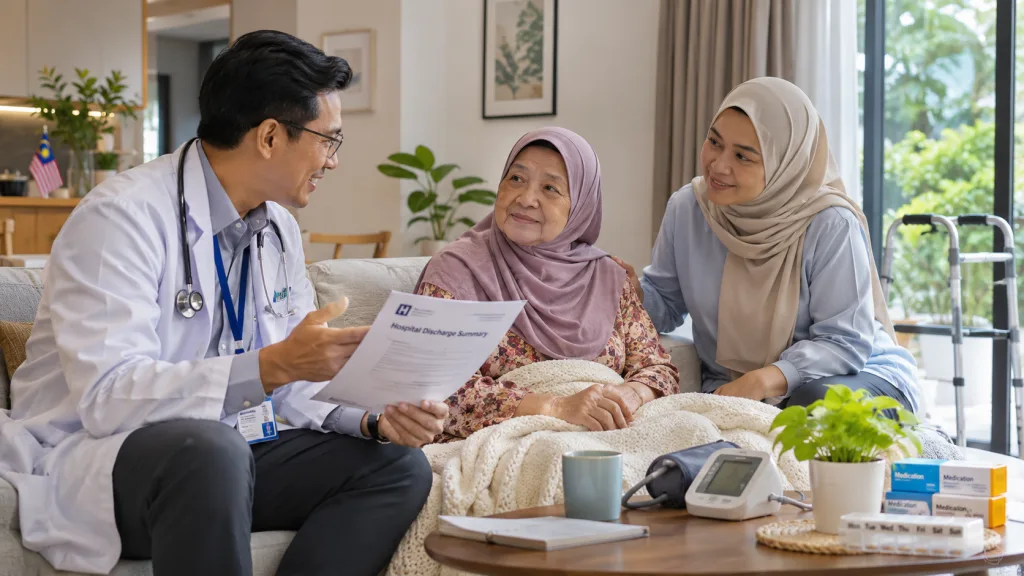
A practical guide for families and caregivers in Malaysia
Reading time: 5 minutes
Medically reviewed by: Dr Xavier Chong, Founder of GP House Call, with over 10 years of experience in home-based medical care and elderly support.
Returning home after a hospital stay is an important step towards recovery. However, older adults may continue to experience weakness, reduced mobility, medication-related problems and other health complications.
A well-organised post-hospitalisation care plan can help support recovery, reduce preventable complications and give family members greater confidence in caring for their loved ones.
What Should You Do After an Elderly Patient Is Discharged from Hospital?
The essential post-hospitalisation checklist for older adults includes reviewing medications, preparing a safe home environment, monitoring health changes, providing appropriate nutrition, supporting mobility and arranging medical follow-up.
The first few days after hospital discharge deserve particular attention, especially for individuals living with chronic illnesses, frailty or limited mobility.
1. Prepare Before Leaving the Hospital
Before bringing your loved one home, make sure you understand their medical condition and ongoing care requirements.
Hospital discharge checklist
- ☐ Obtain the hospital discharge summary.
- ☐ Understand the diagnosis and treatment received.
- ☐ Collect the updated prescription and medication list.
- ☐ Obtain relevant blood test and investigation reports.
- ☐ Understand wound care instructions, if applicable.
- ☐ Confirm dietary and physical activity restrictions.
- ☐ Arrange follow-up appointments.
- ☐ Check whether any test results are still pending.
- ☐ Obtain emergency and medical contact information.
- ☐ Prepare necessary medical equipment and caregiver support.
Visit MedlinePlus – Hospital Discharge Planning for additional guidance.
2. Review All Medications
Medication management is particularly important after hospitalisation because some medications may have been added, discontinued or adjusted.
Family members and caregivers should:
- Compare previous medications with the latest discharge prescription.
- Confirm medication doses and timing.
- Understand possible side effects.
- Monitor the remaining medication supply.
- Use a medication organiser when appropriate.
Never restart discontinued medications or adjust prescribed doses without consulting a healthcare professional.
A house call doctor can help review medications and assess ongoing treatment needs at home post-hospitalisation
3. Prepare a Safe and Comfortable Home
Older adults may have reduced muscle strength and balance after a hospital stay, increasing their risk of falls.
| Home area | Recommended preparation |
|---|---|
| Bedroom | Accessible bed and adequate lighting |
| Bathroom | Grab bars, shower chair and non-slip flooring |
| Living room | Remove loose rugs and unnecessary obstacles |
| Staircase | Secure handrails and sufficient lighting |
| Walking areas | Clear pathways and suitable walking aids |
Additional equipment, such as a wheelchair, walking frame, bedside commode or pressure-relieving mattress, may be helpful depending on individual needs.
Learn more from the CDC’s guide to preventing falls in older adults.
4. Monitor Daily Health and Recovery
Keep a simple daily health record to identify changes in your loved one’s condition.
| Health indicator | What to monitor |
|---|---|
| Blood pressure and pulse | As advised by the doctor |
| Body temperature | Fever or signs of infection |
| Blood oxygen level | If medically indicated |
| Blood glucose | As advised for individuals with diabetes |
| Food and fluid intake | Reduced appetite or inadequate intake |
| Urine and bowel movements | Changes in frequency or amount |
| Mental alertness | Confusion or unusual drowsiness |
| Mobility | Increasing weakness or difficulty walking |
| Wounds and skin | Redness, swelling or discharge |
Not everyone requires daily medical measurements. Follow the monitoring schedule and target ranges recommended by the treating doctor.
5. Support Nutrition and Hydration
Good nutrition supports muscle maintenance, wound healing and overall recovery.
Encourage:
- Balanced meals with suitable protein sources.
- Small, frequent meals if appetite is reduced.
- Adequate fluid intake within prescribed limits.
- Appropriate food textures for individuals with swallowing difficulties.
- Nutritional supplements when recommended by a healthcare professional.
Individuals with heart failure, kidney disease, diabetes or swallowing difficulties may require specific dietary and fluid intake plans.
6. Encourage Safe Mobility and Rehabilitation
Prolonged bed rest can contribute to muscle weakness, pressure injuries and reduced independence.
Depending on medical advice, encourage gentle movement, assisted walking, sitting out of bed and prescribed physiotherapy exercises.
For individuals with limited mobility, arrange regular repositioning and suitable pressure-relieving equipment as advised by the healthcare team.
Always respect the person’s comfort, preferences and physical limitations.
7. Follow the Post-Hospitalisation Recovery Timeline
The following timeline is a general guide for families. Recovery needs vary according to medical conditions and individual abilities.
| Recovery period | Care priorities |
|---|---|
| First 24 hours | Medication review, home safety and essential care arrangements |
| First 72 hours | Observe symptoms, food intake, hydration and mobility |
| First 7 days | Medical review when indicated and reassessment of care needs |
| Weeks 2–4 | Rehabilitation, scheduled investigations and progress monitoring |
| After 30 days | Review long-term medical and daily living support |
Always follow the discharge plan provided by the hospital, particularly when an earlier medical review is required.
8. Recognise Warning Signs After Hospital Discharge
Early recognition of complications is essential.
Contact a doctor promptly if you notice:
- New or persistent fever.
- Worsening wound redness, swelling or discharge.
- Reduced food or fluid intake.
- Reduced urine output.
- Increasing weakness or dizziness.
- Worsening swelling of the legs.
- Suspected medication side effects.
Seek emergency medical attention immediately for:
- New chest pain.
- Severe breathing difficulties.
- Sudden confusion or difficulty waking.
- Facial drooping, slurred speech or sudden weakness on one side.
- Loss of consciousness or seizures.
- Uncontrolled bleeding.
In a medical emergency, call 999 in Malaysia. Do not wait for a house call doctor.
Read the NHS guidance on sudden confusion and MedlinePlus guidance on medical emergencies.
9. Arrange Post-Hospitalisation Medical Care at Home
Some older adults may find travelling to a clinic difficult after hospital discharge.
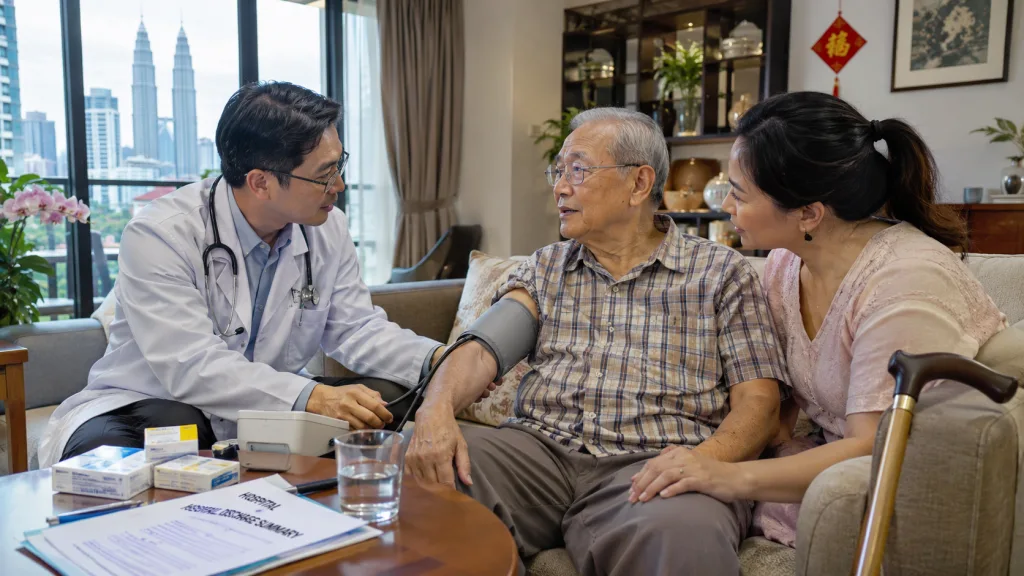
For medically stable individuals, GP House Call provides home-based medical support across Kuala Lumpur and Selangor, including:
- Post-hospitalisation medical assessments.
- Elderly medical consultations.
- Medication reviews.
- Chronic disease monitoring.
- Blood tests at home.
- Wound care and dressing.
- Doctor-assessed IV treatment, where clinically appropriate.
Explore our home medical care services for more information.
Home medical care complements hospital follow-up but does not replace necessary specialist appointments or emergency treatment.
Frequently Asked Questions
When should an elderly patient see a doctor after hospital discharge?
Follow the hospital’s recommended schedule. Older adults with frailty, complex medical conditions or significant medication changes may benefit from an early medical review within the first few days.
Is it normal for older adults to feel weak after hospitalisation?
Weakness can occur following illness, reduced physical activity or inadequate nutrition. However, severe, sudden or worsening weakness requires medical assessment.
Can elderly patients receive post-hospitalisation care at home?
Yes. Medically stable individuals may receive doctor consultations, wound care, blood tests and selected treatments at home, depending on their clinical condition.
How can families reduce the risk of hospital readmission?
Follow the discharge instructions, manage medications correctly, provide appropriate nutrition, monitor symptoms and attend scheduled medical appointments.
Can a doctor visit my loved one at home in Kuala Lumpur or Selangor?
Yes. GP House Call provides home doctor visits for older adults and individuals with limited mobility across Kuala Lumpur and Selangor, subject to location, availability and medical suitability.
Helping Your Loved Ones Recover Safely at Home
Recovery after hospitalisation requires patience, appropriate medical support and consistent care.
A personalised recovery plan can help older adults regain independence while supporting their comfort, dignity and quality of life.
If your loved one requires medical assessment after hospital discharge, GP House Call can provide professional medical support in the comfort of their home.
GP House Call – Home Medical Care in Kuala Lumpur & Selangor
Call or WhatsApp: +6011 7516 7688
Contact GP House Call to arrange a home doctor visit.
About the medical reviewer
Dr Xavier Chong Shin Thong is the founder of GP House Call and an MMC-registered medical practitioner with over 10 years of experience in home-based medical care, elderly health management and chronic disease support.
Medical disclaimer: This article provides general educational information and does not replace individual medical assessment, hospital discharge instructions or professional medical advice.