Types of Oxygen Mask at Home: Nasal Prong, Face Mask and High-Flow Mask
Medically reviewed by Dr. Xavier Chong Shin Thong, MD
Founder of GP House Call
This article will cover essential information about how to use an oxygen mask safely and effectively.
Introduction
Oxygen therapy at home can help selected patients who have low blood oxygen levels. However, oxygen is not a general treatment for all types of breathlessness. Some patients feel breathless because of heart failure, lung infection, anxiety, fluid overload, asthma, COPD, pneumonia, pulmonary fibrosis, anaemia or other medical problems.
Therefore, the correct oxygen device depends on:
- Oxygen saturation reading, also called SpO2
- Breathing effort
- Diagnosis
- Doctor’s assessment
- Oxygen flow rate needed
- Patient comfort
- Safety of home treatment
- Risk of deterioration
At home, the common oxygen delivery options include:
- Nasal prong / nasal cannula
- Simple oxygen face mask
- High-flow mask / high-concentration mask, commonly called non-rebreather mask in medical settings
This article explains the differences, when each device may be used at home, and when urgent hospital care is needed.
Important Safety Note Before Using Oxygen at Home
Oxygen should only be used after medical assessment or under a doctor’s instruction.
Do not buy oxygen online and start oxygen treatment without medical advice. Too much oxygen, wrong flow rate or delayed hospital treatment can be dangerous.
Seek urgent medical help if the patient has:
- Severe shortness of breath
- Blue lips or fingers
- Confusion or drowsiness
- Chest pain
- SpO2 persistently below the doctor’s target range
- Fast breathing or gasping
- Severe wheezing
- New weakness, collapse or reduced consciousness
- Oxygen level not improving despite oxygen support
For emergency symptoms, call ambulance services or proceed to the nearest emergency department.
1. Nasal Prong / Nasal Cannula
What is a nasal prong?
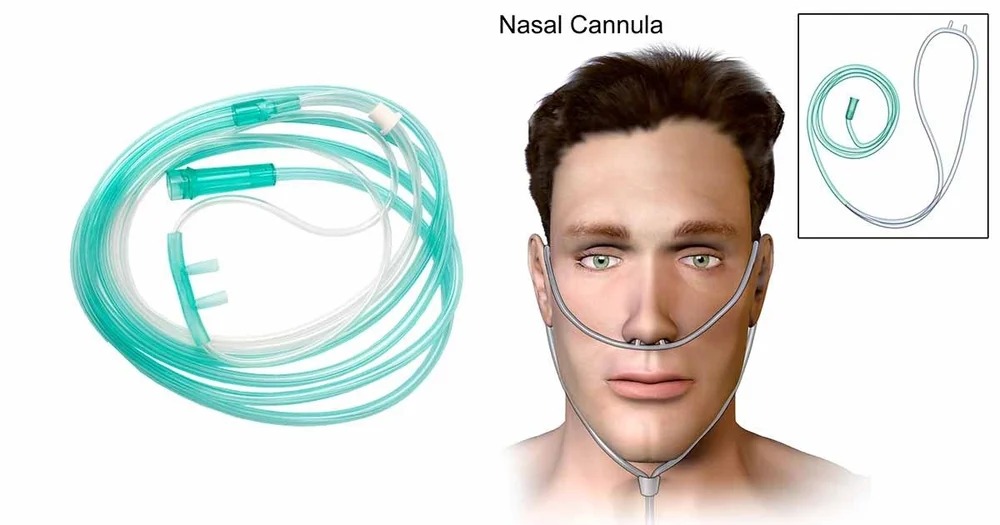
A nasal prong, also called a nasal cannula, is a soft plastic tube with two small prongs placed inside the nostrils. It connects to an oxygen concentrator or oxygen cylinder.
Common oxygen flow range
Typical low-flow nasal cannula use:
- 1–6 L/min, depending on prescription and patient condition
The delivered oxygen level varies because room air mixes with oxygen during breathing.
When nasal prong may be used at home
A nasal prong is usually suitable for patients who need low to moderate oxygen support and can breathe comfortably.
Common home-use situations include:
- Stable long-term oxygen therapy
- COPD with doctor-prescribed oxygen target
- Pulmonary fibrosis with stable oxygen requirement
- Heart failure with low oxygen level after assessment
- Elderly patients with mild oxygen requirement
- Palliative care or comfort-focused care
- Patients who need oxygen during movement or sleep, if prescribed
Advantages of nasal prong
- Comfortable for long hours
- Allows eating and drinking
- Allows speaking
- Easier for elderly patients to tolerate
- Less claustrophobic than a mask
- Suitable for stable home oxygen use
Disadvantages of nasal prong
- May cause nasal dryness
- May irritate the nostrils
- May not provide enough oxygen during acute deterioration
- Mouth breathing may reduce oxygen delivery
- Tubing can slip off during sleep
Practical home tips
- Keep the prongs facing correctly into the nostrils.
- Secure tubing behind the ears or under the chin.
- Check SpO2 as advised by the doctor.
- Use humidification only if recommended.
- Do not increase oxygen flow without medical advice.
- Keep oxygen away from flames, cigarettes and gas stoves.
2. Simple Oxygen Face Mask
What is a simple oxygen face mask?
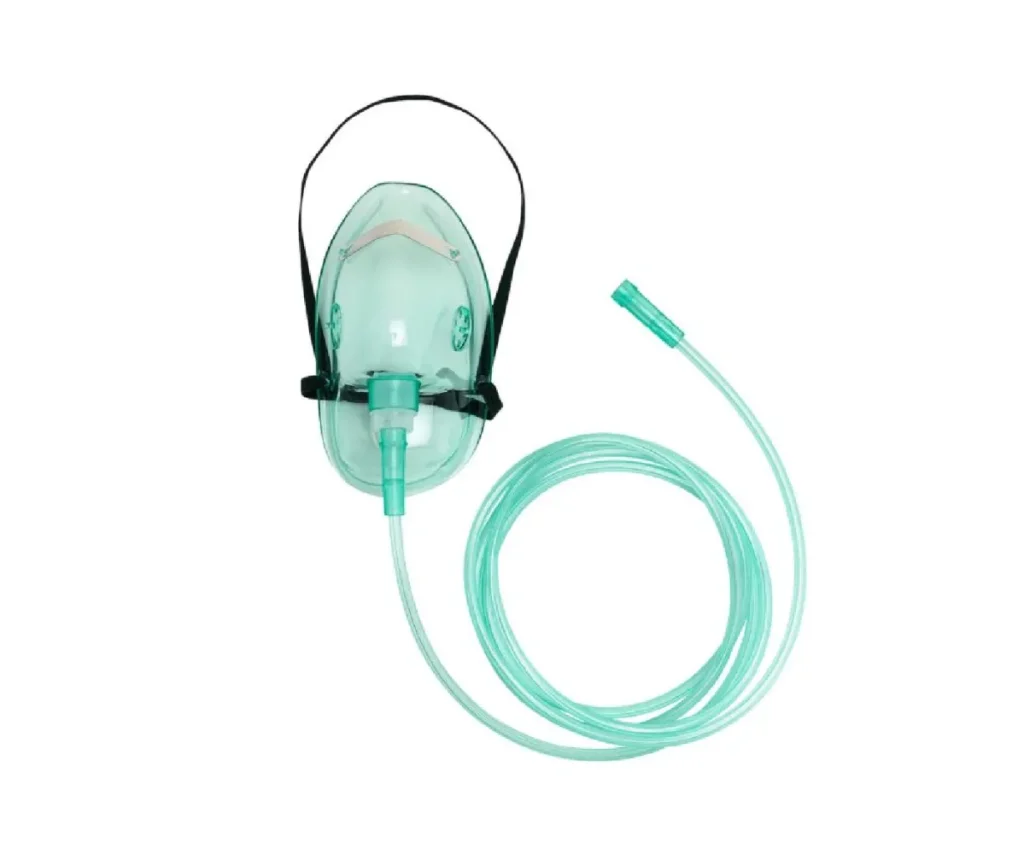
A simple oxygen face mask covers the nose and mouth. It connects to an oxygen source through tubing.
It gives a higher oxygen concentration than nasal prong in many situations, but the patient must tolerate a mask on the face.
Common oxygen flow range
Typical simple face mask flow:
- Usually 5–10 L/min
A flow below 5 L/min is generally avoided because exhaled carbon dioxide may collect inside the mask.
When face mask may be used at home
A simple oxygen face mask may be used when the patient needs more oxygen than nasal prong can provide, but the condition remains suitable for home care after medical assessment.
Possible situations include:
- Short-term oxygen support while waiting for doctor review
- Palliative care symptom relief
- Moderate oxygen requirement under a home-care plan
- Patient cannot maintain target SpO2 with nasal prong
- Mouth-breathing patient who does not benefit well from nasal prong
Advantages of face mask
- Delivers more oxygen than standard nasal prong in many cases
- Useful when the patient breathes through the mouth
- Easy to apply
- Helpful for short-term support
Disadvantages of face mask
- Difficult to eat or drink while wearing it
- May feel uncomfortable or claustrophobic
- May cause skin pressure marks
- Can interfere with speech
- Needs correct oxygen flow to reduce carbon dioxide rebreathing risk
Practical home tips
- Make sure the mask covers both nose and mouth.
- Use the flow rate prescribed by the doctor.
- Do not use a simple face mask at very low flow.
- Check for pressure marks around the nose and cheeks.
- Escalate care if oxygen saturation remains low.
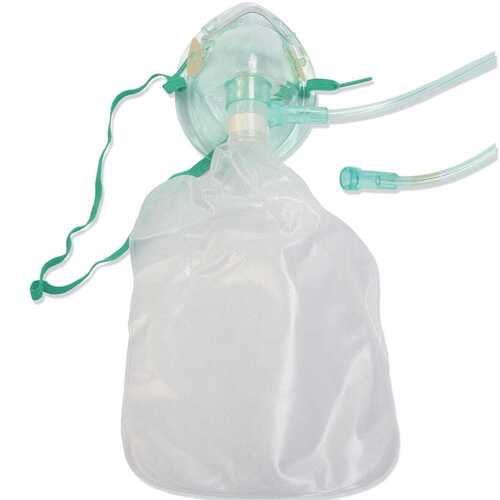
3. High-Flow Mask / High-Concentration Mask
What does “high-flow mask” mean?
Many patients and families use the term “high-flow mask” to describe a mask that gives stronger oxygen support.
In medical practice, two different things may be meant:
A. High-concentration mask / non-rebreather mask
This is a face mask with a reservoir bag. It can deliver high oxygen concentration when connected to a suitable oxygen source and correct flow rate.
B. High-flow nasal cannula, also called HFNC
This is a specialised machine that delivers heated, humidified oxygen at high flow. It usually needs hospital-level equipment, close monitoring and trained staff.
For home use, “high-flow mask” usually refers to a high-concentration mask or non-rebreather mask, not HFNC.
Common oxygen flow range
A non-rebreather or high-concentration mask often needs high oxygen flow, commonly around:
- 10–15 L/min, depending on clinical instruction and equipment
The reservoir bag should stay inflated during breathing. A collapsed bag may mean the oxygen flow is inadequate or the setup is wrong.
When high-flow mask may be used at home
A high-flow or high-concentration mask is usually not for routine unsupervised home use.
It may be considered only in specific situations such as:
- Emergency oxygen support while waiting for ambulance
- Doctor-supervised home treatment
- Palliative or end-of-life care plan
- Severe breathlessness with a documented comfort-focused care plan
- Short-term bridging support before hospital transfer
Advantages of high-flow / high-concentration mask
- Provides higher oxygen concentration than nasal prong or simple face mask
- Useful during acute oxygen drop
- May help selected palliative patients with severe breathlessness
- Can support a patient temporarily while waiting for urgent care
Disadvantages and risks
- Not suitable without proper assessment
- Needs high oxygen flow
- Oxygen cylinder may run out quickly
- Not all oxygen concentrators can supply the needed flow
- May delay necessary hospital treatment if used wrongly
- Can be dangerous if the reservoir bag collapses
- Requires close monitoring
Practical home tips
- Use only if instructed by a doctor or emergency responder.
- Make sure the oxygen source can provide the required flow.
- Keep the reservoir bag inflated.
- Monitor SpO2, breathing effort and mental status.
- Call emergency services if the patient remains unstable.
Quick Comparison Table
| Device | Common Flow Range | Oxygen Support Level | Best For | Home Use Suitability |
|---|---|---|---|---|
| Nasal prong / nasal cannula | 1–6 L/min | Low to moderate | Stable long-term oxygen, elderly home oxygen support, comfort care | Common for prescribed home oxygen |
| Simple oxygen face mask | 5–10 L/min | Moderate | Mouth breathing, short-term support, higher oxygen need than nasal prong | Use after medical advice |
| High-flow / high-concentration mask | Often 10–15 L/min | High | Emergency support, doctor-supervised care, selected palliative cases | Not routine; needs close supervision |
Which Oxygen Device Is Best for Elderly Patients at Home?
There is no single “best” oxygen mask for every elderly patient.
The best device depends on the patient’s oxygen level, diagnosis and treatment goal.
Nasal prong may be better when:
- Oxygen need is mild or stable
- Patient needs oxygen for many hours
- Patient wants to talk, eat and drink
- Patient feels uncomfortable with a mask
- Long-term oxygen therapy has been prescribed
Face mask may be better when:
- Patient breathes mainly through the mouth
- Nasal prong does not improve SpO2 enough
- Oxygen support is needed for a short period
- Patient can tolerate a mask
High-flow / high-concentration mask may be needed when:
- Oxygen level drops significantly
- Patient is waiting for emergency transfer
- Doctor gives specific home instructions
- Patient is under palliative or end-of-life care planning
How to Monitor Oxygen at Home
A fingertip pulse oximeter helps check SpO2 and pulse rate.
Basic home monitoring equipment
Useful items include:
- Fingertip pulse oximeter
- Blood pressure monitor
- Thermometer
- Glucometer for diabetic patients
- Oxygen concentrator or oxygen cylinder, if prescribed
- Written oxygen instruction plan
- Emergency contact list
Important readings to record
Caregivers should record:
- SpO2 reading
- Pulse rate
- Respiratory rate
- Temperature
- Blood pressure
- Oxygen flow rate used
- Symptoms
- Time of reading
- Response after oxygen
This record helps the doctor decide whether home care remains safe.
When to Call a Doctor for Home Oxygen Support
Call a doctor for assessment if the elderly patient has:
- New shortness of breath
- Increasing oxygen requirement
- Fever with low oxygen
- Cough with lethargy
- Worsening COPD symptoms
- Suspected pneumonia
- Reduced appetite with weakness
- Confusion or unusual drowsiness
- Swollen legs with breathlessness
- Low SpO2 readings
- Unclear oxygen target range
A house call doctor can assess the patient at home, check vital signs, examine the chest, review medication, and advise whether home treatment or hospital referral is safer.
When Home Oxygen Is Not Enough
Home oxygen should not replace hospital care when the patient is unstable.
Hospital assessment may be needed for:
- Pneumonia with low oxygen
- Severe COPD exacerbation
- Acute heart failure
- Pulmonary embolism
- Sepsis
- Severe asthma attack
- Stroke symptoms
- Chest pain
- Persistent low oxygen despite oxygen therapy
In these situations, oxygen only supports the patient temporarily. The underlying cause still needs urgent treatment.
Oxygen Safety at Home
Oxygen supports burning. This means fire can spread faster around oxygen.
Safety checklist
- No smoking near oxygen.
- Keep oxygen away from gas stove, candles and open flames.
- Keep oxygen equipment away from heat.
- Do not apply oily products near oxygen tubing or mask.
- Keep cylinders upright and secured.
- Do not change oxygen flow without medical advice.
- Keep tubing away from walking paths to prevent falls.
- Check that the oxygen concentrator has power supply.
- Keep backup plan ready during power failure.
GP House Call: Doctor-Assessed Oxygen Support at Home in KL and Selangor
GP House Call provides doctor home visit services for adults and elderly patients in Kuala Lumpur and Selangor.
Home assessment may include:
- Doctor consultation and physical examination
- Vital signs monitoring
- SpO2 and pulse assessment
- Chest examination
- Medication review
- Oxygen support advice
- Palliative symptom support where appropriate
- Referral letter if hospital admission is needed
- Care coordination for nursing, laboratory tests or medical equipment
GP House Call is suitable for elderly patients, bedridden patients and families who need medical support at home.
Frequently Asked Questions
1. What is the difference between nasal prong and oxygen face mask?
A nasal prong delivers oxygen through two small tubes placed inside the nostrils. It is more comfortable for long-term use and allows eating and talking.
An oxygen face mask covers the nose and mouth. It may deliver more oxygen than nasal prong but can feel less comfortable.
2. Can oxygen be used at home without a doctor?
No. Oxygen should be used after medical assessment or under a doctor’s instruction. Wrong oxygen use can be dangerous and may delay urgent treatment.
3. Which oxygen mask is best for elderly patients at home?
For stable elderly patients, nasal prong is often easier to tolerate. A face mask may help when a patient needs more oxygen or breathes mainly through the mouth. A high-flow or high-concentration mask needs close supervision.
4. What oxygen level is dangerous?
A low oxygen level can be dangerous, especially if the patient has breathlessness, chest pain, confusion, drowsiness, blue lips or worsening weakness. The safe oxygen target may differ in COPD and other lung diseases. Follow the target range given by the doctor.
5. Can oxygen help all breathless patients?
No. Oxygen helps when blood oxygen level is low. If oxygen level is normal, breathlessness may come from other causes such as anxiety, heart disease, lung disease, infection, anaemia or fluid overload.
6. Can a home oxygen concentrator support a high-flow mask?
Many standard home oxygen concentrators cannot provide the high flow needed for a high-concentration mask. An oxygen cylinder or special equipment may be required. A doctor or oxygen supplier should confirm the correct setup.
7. Is a high-flow mask safe at home?
A high-flow or high-concentration mask should not be used routinely without medical supervision. It may be used during emergency support, doctor-supervised home care or selected palliative care plans.
8. Should patients sleep with oxygen?
Some patients need oxygen during sleep, but this depends on assessment and prescription. Do not start nighttime oxygen without medical advice.
9. How often should SpO2 be checked at home?
Frequency depends on the patient’s condition. For unstable patients, readings may need more frequent monitoring. For stable long-term oxygen users, the doctor may provide a fixed monitoring schedule.
10. When should a family call GP House Call?
Call GP House Call when an elderly or bedridden patient has new breathlessness, low oxygen reading, fever, cough, weakness, worsening chronic lung disease, or needs doctor assessment at home in KL and Selangor.
Conclusion
Nasal prong, oxygen face mask and high-flow mask serve different purposes. Nasal prong suits many stable home oxygen patients. Face mask may help when more oxygen support is needed. High-flow or high-concentration mask should be reserved for doctor-supervised use, emergency bridging or selected palliative care plans.
Correct oxygen use starts with proper assessment. For elderly patients at home, a doctor review helps determine the cause of low oxygen, the safest device, and whether home care or hospital care is more appropriate.
For doctor home visit support in KL and Selangor, contact GP House Call.
Website: https://gphousecall.my/
Phone / WhatsApp: 011-75167688
Internal Links
- GP House Call homepage: https://gphousecall.my/
- About GP House Call: https://gphousecall.my/about-us/
- GP House Call services: https://gphousecall.my/our-services/
External References
- NHS home oxygen therapy: https://www.nhs.uk/tests-and-treatments/home-oxygen-treatment/
- NHS Inform home oxygen treatment: https://www.nhsinform.scot/tests-and-treatments/medicines-and-medical-aids/medical-aids/home-oxygen-treatment
- American Lung Association oxygen therapy: https://www.lung.org/lung-health-diseases/lung-procedures-and-tests/oxygen-therapy
- American Lung Association oxygen delivery devices: https://www.lung.org/lung-health-diseases/lung-procedures-and-tests/oxygen-therapy/oxygen-delivery-devices
- American Lung Association oxygen safety: https://www.lung.org/lung-health-diseases/lung-procedures-and-tests/oxygen-therapy/using-oxygen-safely